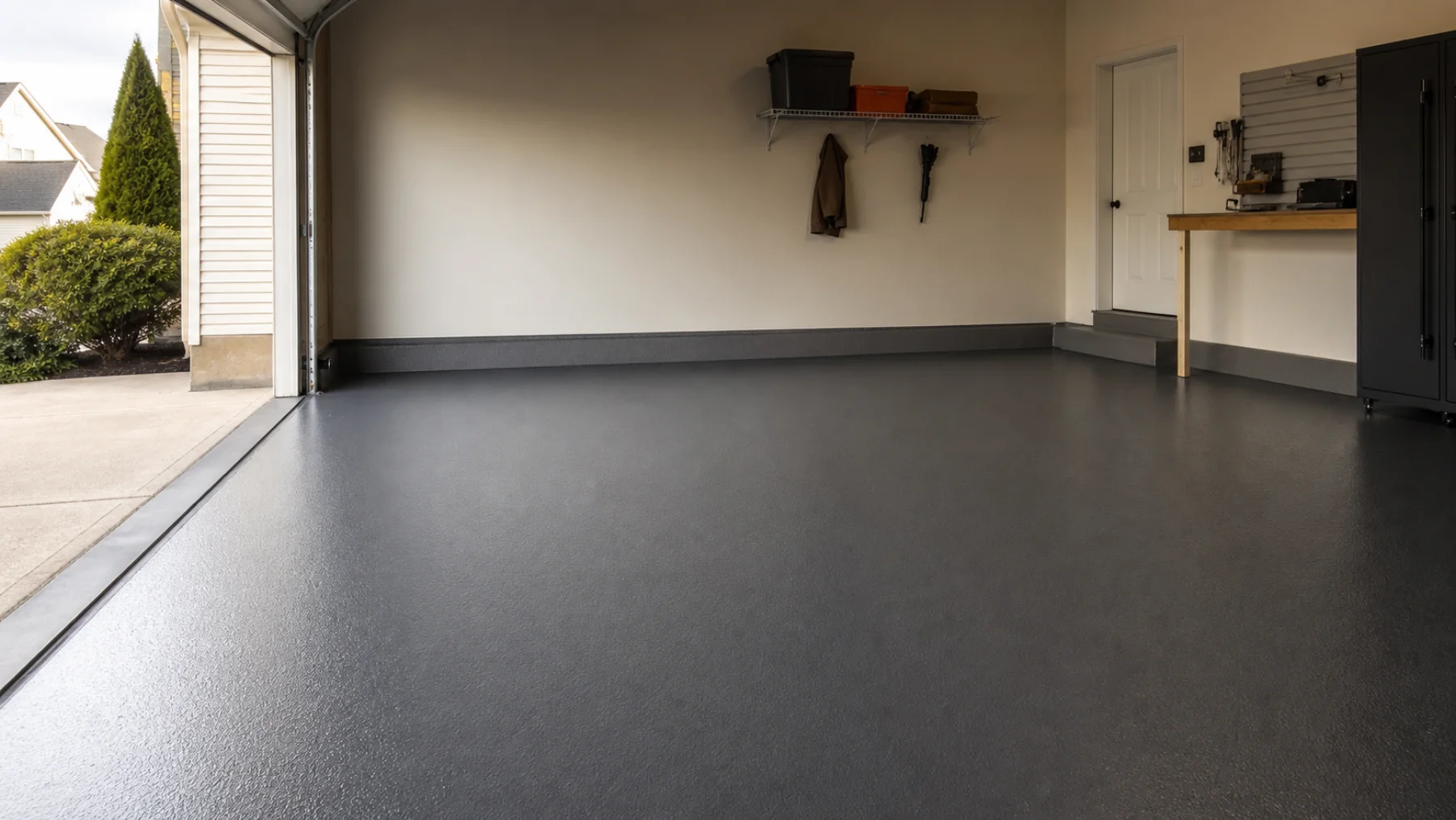
The best-value kit is the one that fully covers the measured slab with compatible prep, primer, basecoat, texture, and topcoat. Box price without film build and coverage is a false comparison.
- 05TopcoatWear, chemicals, UV
- 04BroadcastTexture + appearance
- 03BasecoatBuild + color
- 02PrimerBond + wetting
- 01Prepared slabProfile + repair
Inventory the system before price
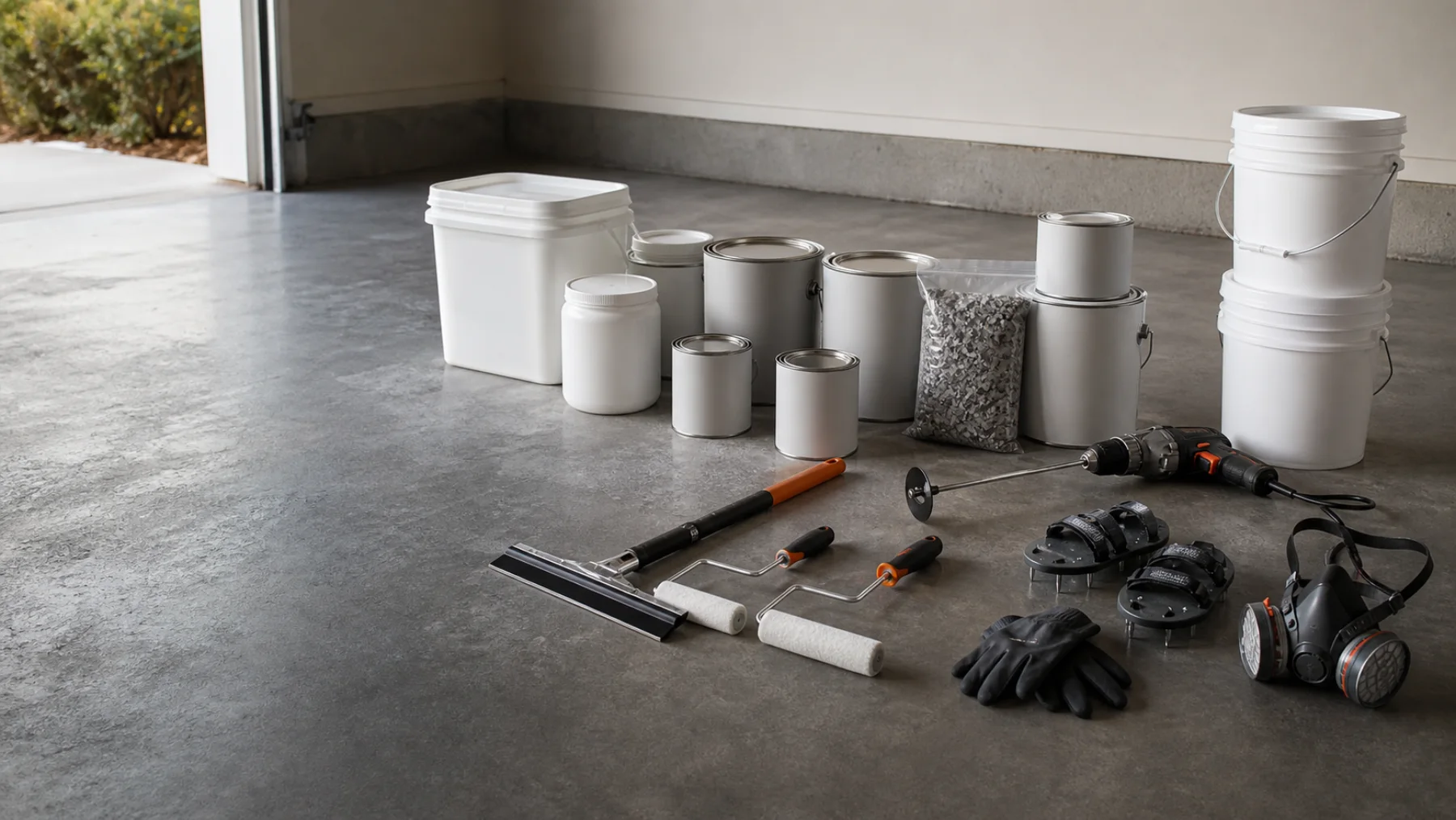
Write down every required layer and tool before comparing carts. Some kits include etch, flakes, rollers, and cleaner; others are coating components sold to experienced installers. Missing primer, crack repair, grinder rental, spike shoes, or an abrasion-resistant topcoat can erase the apparent savings.
- Surface-prep method and rental cost
- Moisture test compatible with the manufacturer limit
- Primer requirement and recoat window
- Basecoat coverage at the intended thickness
- Broadcast quantity and non-slip strategy
- Topcoat chemistry and vehicle return time
Coverage is not a promise
Published coverage is normally a range because porous or aggressively profiled concrete consumes more material. Multiply floor area by coat count, then add waste. Round up to whole kits. Running out mid-pass can create visible lap lines or leave the system outside its recoat window.
Color and hiding also matter. A light base over dark or mottled concrete may require primer or another pass even when the area technically fits the label.
Reject incomplete comparisons
Do not compare a single color coat with a primer-plus-base-plus-clear full system. Compare installed material cost per square foot, time at risk, and what happens if the slab needs repair. Our cost calculator makes those assumptions explicit.