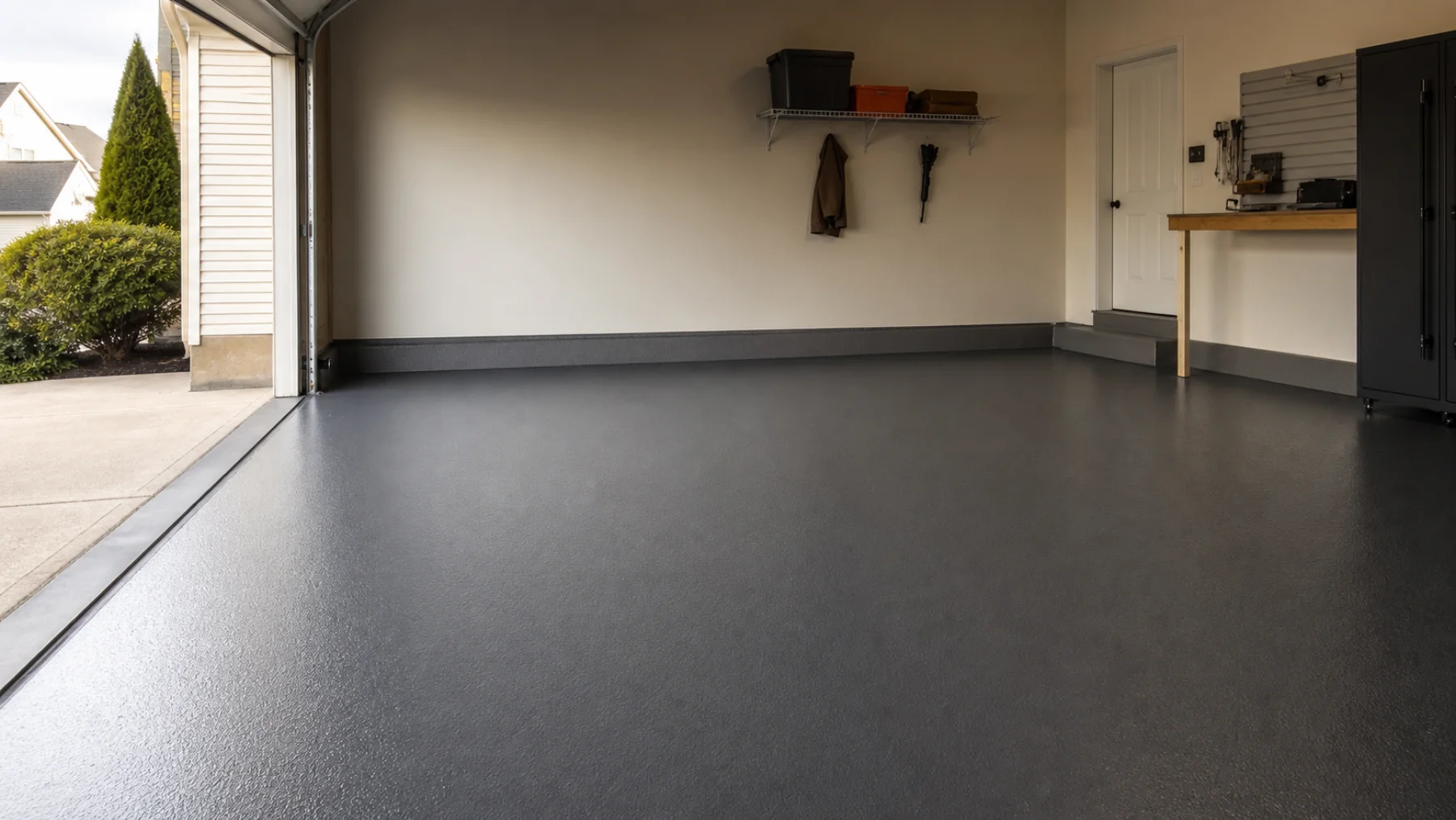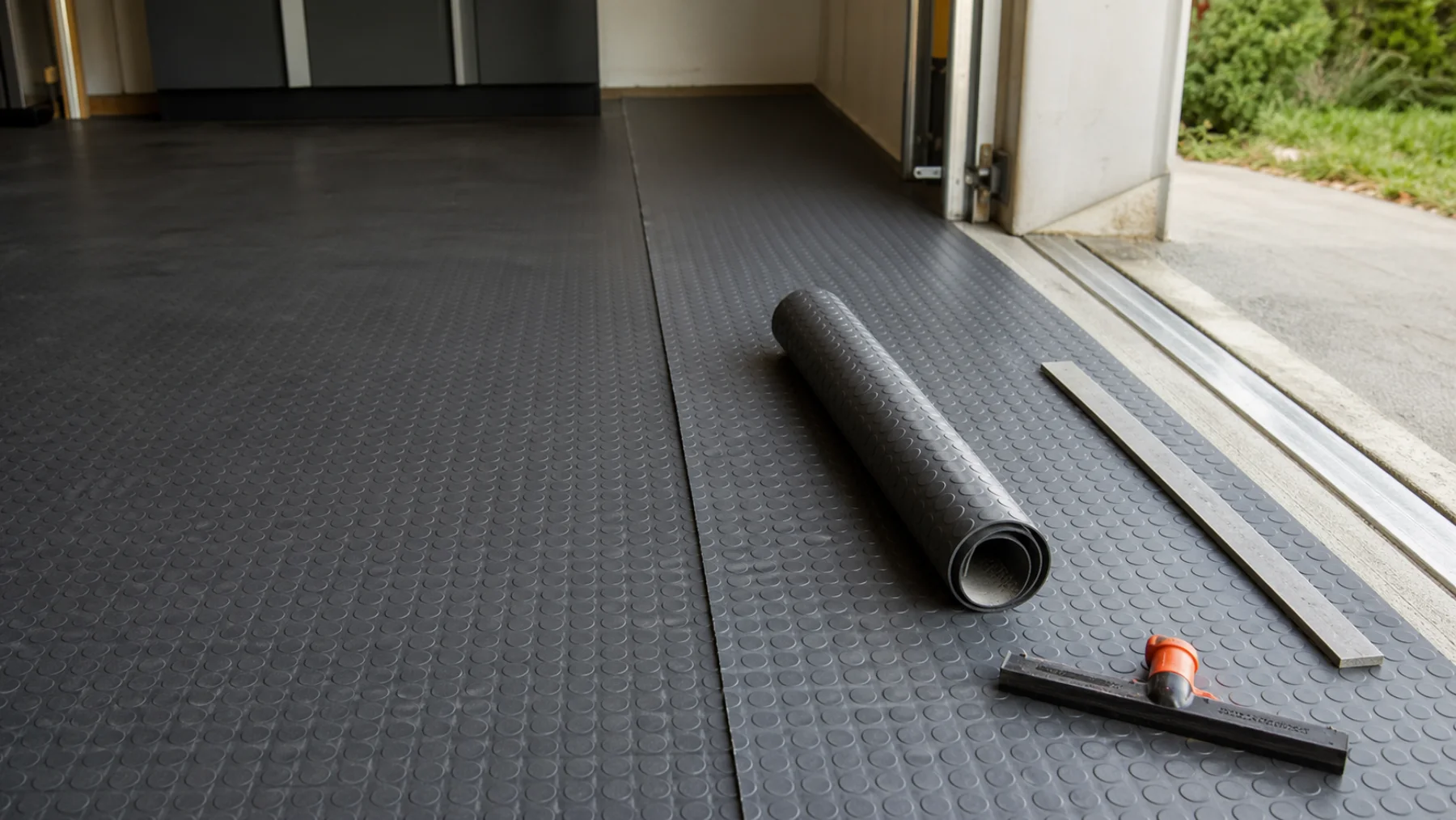
DIY is rational when the slab is understood, prep equipment is available, the system has a forgiving work window, and the installer can stage every step. Unknown moisture or major cracks are stop signs.
Go/no-go before shopping
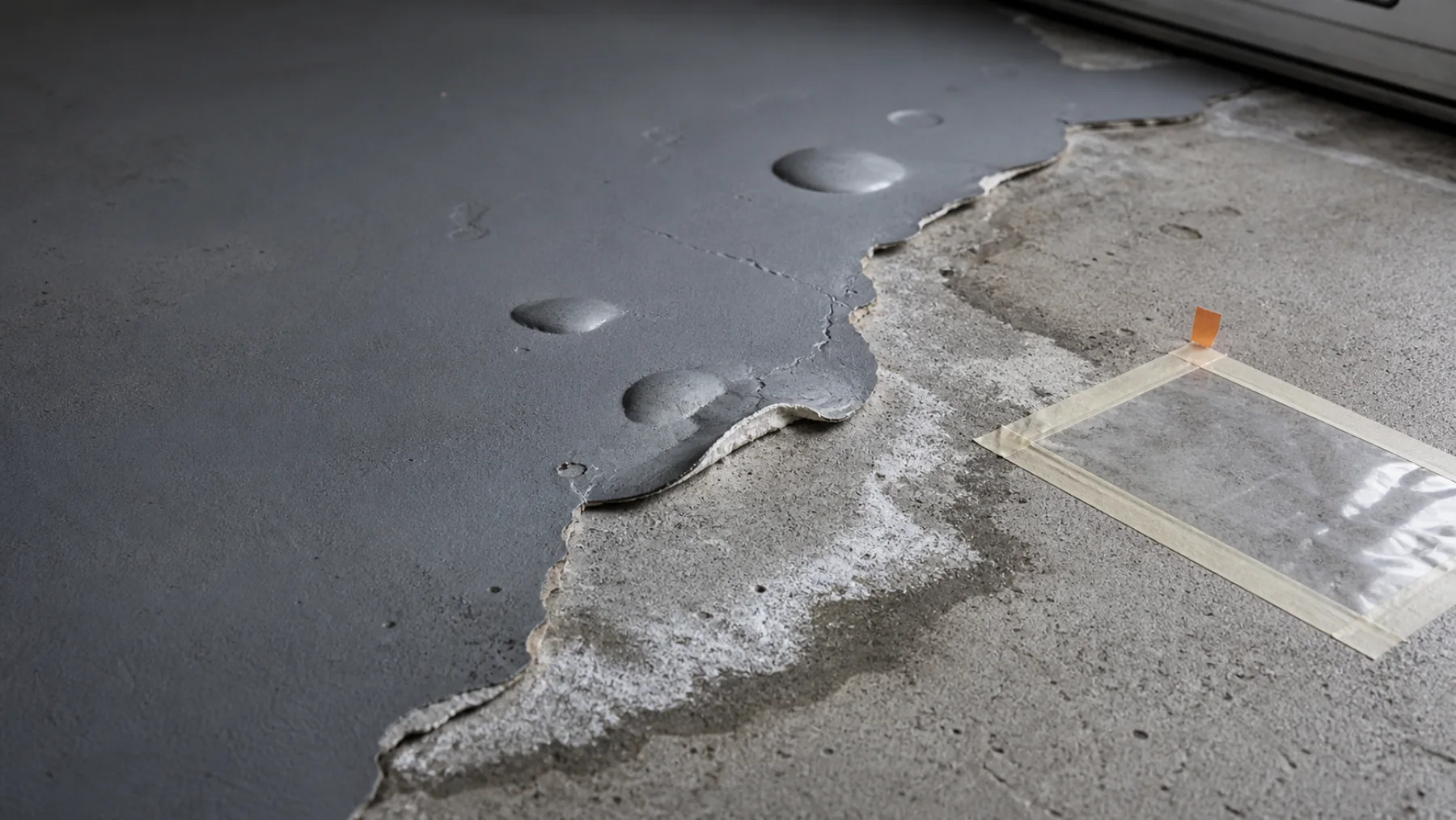
Do not buy coating because a weekend opened up. First check moisture, contamination, concrete strength, cracks, previous sealer, temperature, humidity, and weather. Confirm the product’s acceptable conditions and recoat windows.
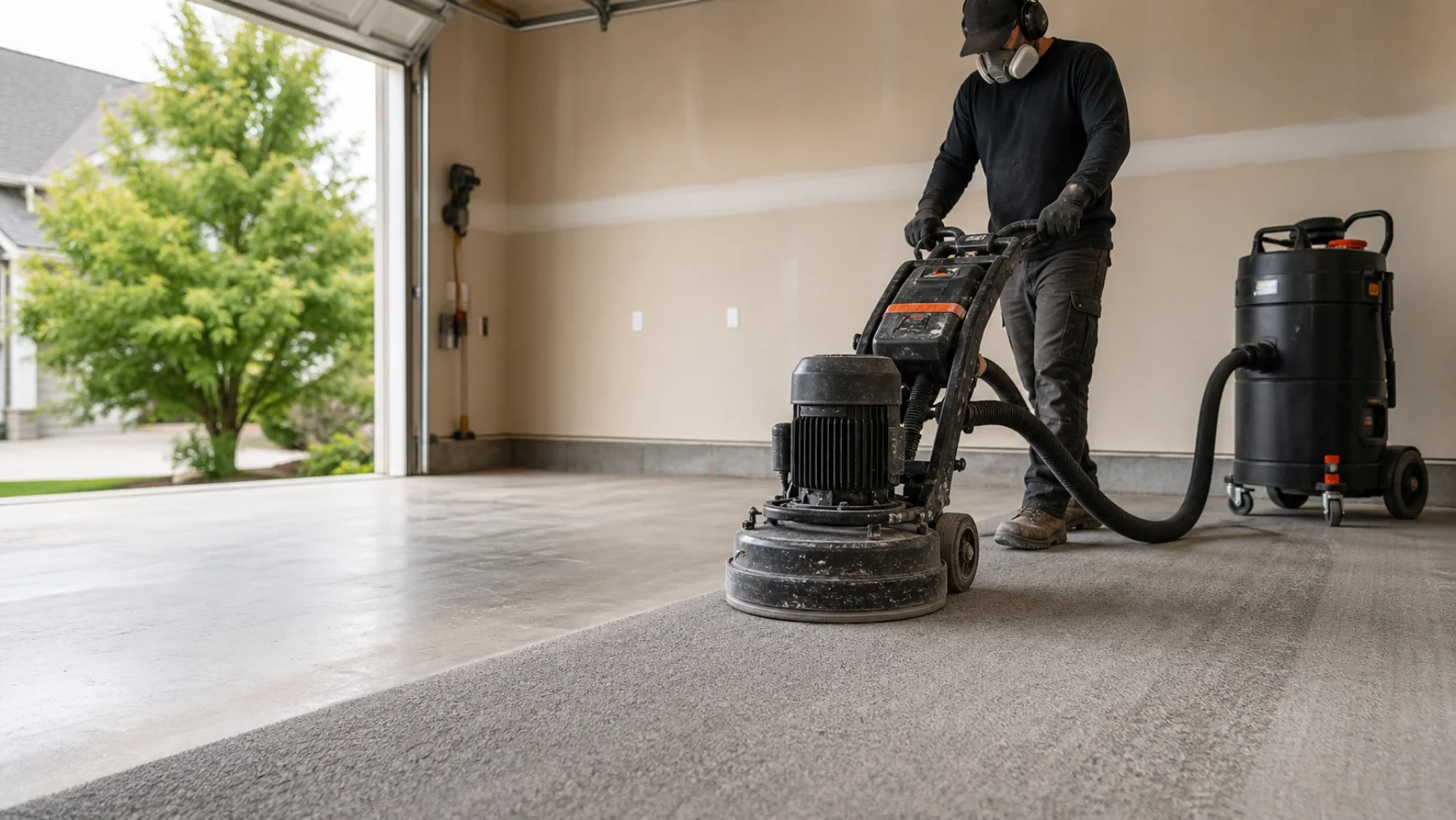
A grinder and dust extractor are process controls, not optional accessories when the system specifies mechanical preparation. Acid etching and grinding are not interchangeable in every system.
- Stop: visible efflorescence, dark wet areas, hydrostatic water, or moving cracks.
- Pause: unknown sealer, oily slab, weak laitance, or no dust-control plan.
- Proceed conditionally: dry sound slab, verified profile method, staged materials, and realistic cure time.
Rehearse the application
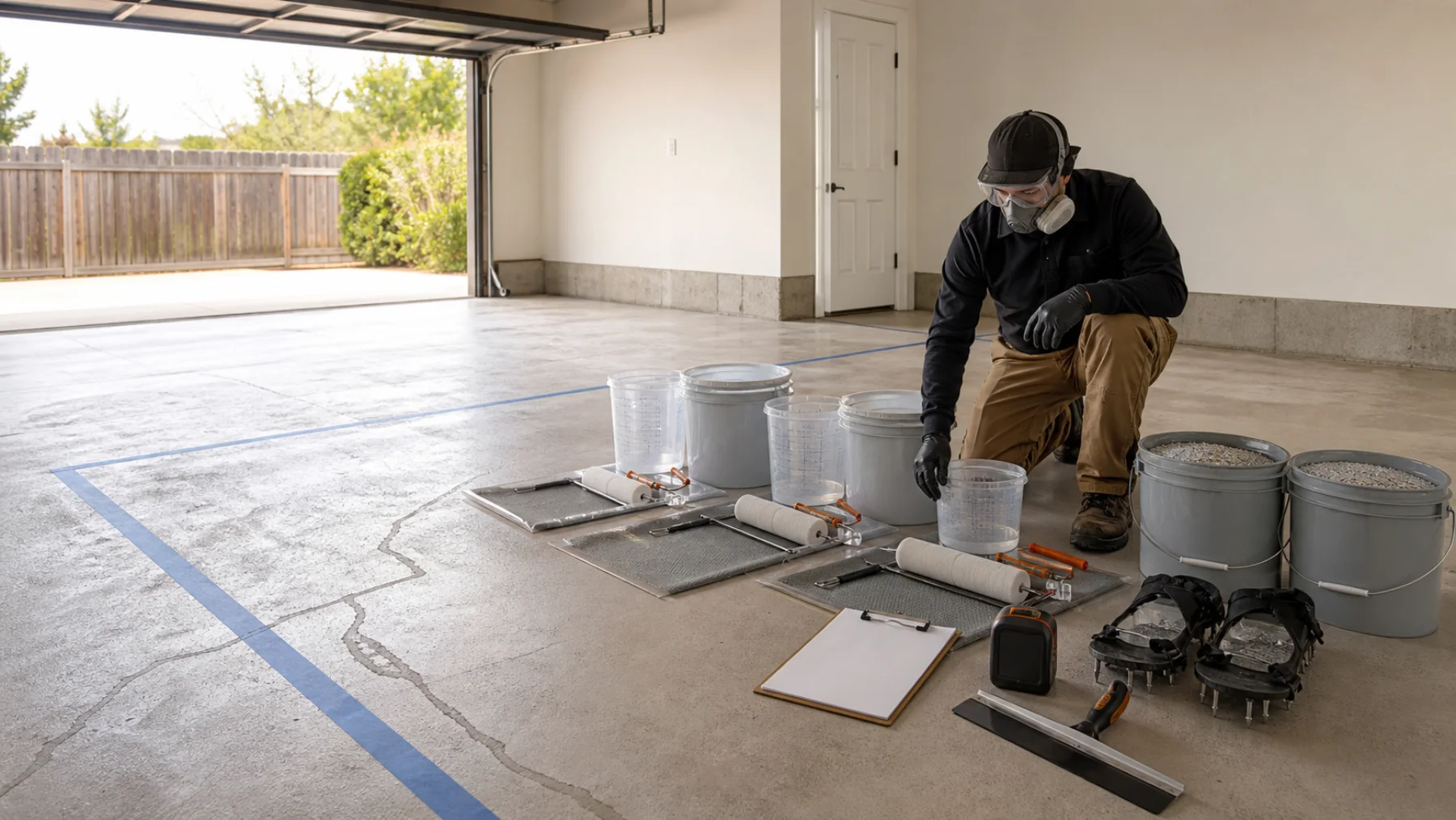
Divide the floor into batches that fit the pot life. Assign mixing, cutting, rolling, and broadcasting roles. Mark batch boundaries, stage clean tools, and keep a timer visible. A fast system should be rehearsed dry before resin is mixed.
Personal protective equipment must match the product SDS and the mechanical-prep hazards. Ventilation alone is not a substitute for correct respiratory and skin protection.
Know when labor is the cheaper option
Large floors, complicated edges, major repair, short pot life, and strict downtime make a contractor more economical than a failed DIY attempt. Grade the project difficulty and compare written quotes against the same specification.